

1.5 Kg Converted To Pounds


NEXIS ion engine test (2005)
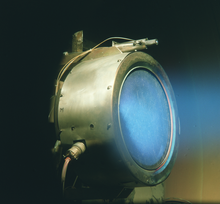
A prototype of a xenon ion engine being tested at NASA's Jet Propulsion Laboratory
An ion thruster, ion drive, or ion engine is a form of electric propulsion used for spacecraft propulsion. It creates thrust by accelerating ions using electricity.
An ion thruster ionizes a neutral gas by extracting some electrons out of atoms, creating a deject of positive ions. These ion thrusters rely mainly on electrostatics equally ions are accelerated by the Coulomb force along an electrical field. Temporarily stored electrons are finally reinjected by a neutralizer in the cloud of ions later on it has passed through the electrostatic grid, and so the gas becomes neutral again and can freely disperse in space without whatsoever further electrical interaction with the thruster. Past contrast, electromagnetic thrusters use the Lorentz forcefulness to accelerate all species (costless electrons every bit well as positive and negative ions) in the aforementioned direction whatever their electric charge, and are specifically referred to equally plasma propulsion engines, where the electric field is non in the management of the acceleration.[one] [two]
Ion thrusters in operation typically swallow ane–vii kW of power, have exhaust velocities effectually 20–50 km/s (I sp 2000–5000s), and possess thrusts of 25–250 mN and a propulsive efficiency 65–80%[3] [4] though experimental versions have achieved 100 kW (130 hp), 5 N (1.ane lbf).[5]
The Deep Space one spacecraft, powered past an ion thruster, inverse velocity by 4.three km/s (two.seven mi/s) while consuming less than 74 kg (163 lb) of xenon. The Dawn spacecraft broke the tape, with a velocity change of eleven.5 km/s (seven.ane mi/s), though it was only half equally efficient, requiring 425 kg (937 lb) of xenon.[six]
Applications include control of the orientation and position of orbiting satellites (some satellites have dozens of depression-power ion thrusters) and employ every bit a main propulsion engine for depression-mass robotic space vehicles (such as Deep Space 1 and Dawn).[iii] [iv]
Ion thrust engines are practical only in the vacuum of space and cannot take vehicles through the atmosphere considering ion engines practise not work in the presence of ions outside the engine; additionally, the engine'southward minuscule thrust cannot overcome any significant air resistance. An ion engine cannot generate sufficient thrust to achieve initial liftoff from whatever celestial body with meaning surface gravity. For these reasons, spacecraft must rely on other methods such as conventional chemical rockets or non-rocket launch technologies to reach their initial orbit.
Origins [edit]

The showtime person who wrote a paper introducing the idea publicly was Konstantin Tsiolkovsky in 1911.[vii] The technique was recommended for near-vacuum conditions at high altitude, but thrust was demonstrated with ionized air streams at atmospheric pressure. The idea appeared again in Hermann Oberth'southward "Wege zur Raumschiffahrt" (Ways to Spaceflight), published in 1929,[8] where he explained his thoughts on the mass savings of electric propulsion, predicted its apply in spacecraft propulsion and attitude control, and advocated electrostatic acceleration of charged gasses.[9]
A working ion thruster was built past Harold R. Kaufman in 1959 at the NASA Glenn Research Center facilities. It was similar to a gridded electrostatic ion thruster and used mercury for propellant. Suborbital tests were conducted during the 1960s and in 1964, the engine was sent into a suborbital flying aboard the Infinite Electric Rocket Examination-1 (SERT-ane).[10] [11] It successfully operated for the planned 31 minutes before falling to Earth.[12] This exam was followed by an orbital test, SERT-2, in 1970.[xiii] [14]
An alternate form of electric propulsion, the Hall-effect thruster, was studied independently in the The states and the Soviet Wedlock in the 1950s and 1960s. Hall-issue thrusters operated on Soviet satellites from 1972 until the tardily 1990s, mainly used for satellite stabilization in northward–south and in eastward–west directions. Some 100–200 engines completed missions on Soviet and Russian satellites.[15] Soviet thruster design was introduced to the Due west in 1992 after a squad of electric propulsion specialists, nether the support of the Ballistic Missile Defense Organisation, visited Soviet laboratories.
Full general working principle [edit]
Ion thrusters use beams of ions (electrically charged atoms or molecules) to create thrust in accordance with momentum conservation. The method of accelerating the ions varies, only all designs take advantage of the charge/mass ratio of the ions. This ratio means that relatively small potential differences can create high exhaust velocities. This reduces the amount of reaction mass or propellant required, but increases the amount of specific power required compared to chemical rockets. Ion thrusters are therefore able to achieve high specific impulses. The drawback of the low thrust is low acceleration considering the mass of the electric power unit straight correlates with the corporeality of power. This low thrust makes ion thrusters unsuited for launching spacecraft into orbit, but effective for in-space propulsion over longer periods of time.
Ion thrusters are categorized equally either electrostatic or electromagnetic. The main difference is the method for accelerating the ions.
- Electrostatic ion thrusters utilise the Coulomb forcefulness and accelerate the ions in the direction of the electric field.
- Electromagnetic ion thrusters use the Lorentz force to move the ions.
Electric ability for ion thrusters is ordinarily provided by solar panels. However, for sufficiently large distances from the sun, nuclear power may exist used. In each instance, the power supply mass is proportional to the peak ability that can be supplied, and both provide, for this awarding, almost no limit to the free energy.[16]
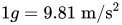
Electric thrusters tend to produce low thrust, which results in low acceleration. Defining , the standard gravitational acceleration of Globe, and noting that , this can be analyzed. An NSTAR thruster producing a thrust strength of 92 mN[17] will accelerate a satellite with a mass of 1ton by 0.092Due north / 1000 kg = 9.2×10−five m/stwo (or nine.38×x−6 m). Yet, this acceleration can exist sustained for months or years at a time, in contrast to the very short burns of chemical rockets.


Where:
- F is the thrust forcefulness in N,
- η is the efficiency
- P is the electrical power used by the thruster in Due west, and
- I sp is the specific impulse in seconds.
The ion thruster is not the most promising type of electrically powered spacecraft propulsion, merely it is the most successful in practice to date.[4] An ion drive would require ii days to accelerate a car to highway speed in vacuum. The technical characteristics, especially thrust, are considerably junior to the prototypes described in literature,[three] [4] technical capabilities are limited by the space charge created by ions. This limits the thrust density (forcefulness per cross-sectional area of the engine).[4] Ion thrusters create small thrust levels (the thrust of Deep Space 1 is approximately equal to the weight of one sail of paper[4]) compared to conventional chemical rockets, just achieve high specific impulse, or propellant mass efficiency, by accelerating the exhaust to high speed. The ability imparted to the frazzle increases with the square of frazzle velocity while thrust increase is linear. Conversely, chemical rockets provide high thrust, merely are limited in total impulse by the small amount of free energy that can be stored chemically in the propellants.[xviii] Given the practical weight of suitable power sources, the acceleration from an ion thruster is oft less than one-thousandth of standard gravity. Withal, since they operate as electric (or electrostatic) motors, they convert a greater fraction of input power into kinetic exhaust power. Chemic rockets operate as heat engines, and Carnot's theorem limits the exhaust velocity.
Electrostatic thrusters [edit]
Gridded electrostatic ion thrusters [edit]

A diagram of how a gridded electrostatic ion engine (multipole magnetic cusp type) works
Gridded electrostatic ion thrusters evolution started in the 1960s[19] and, since then, information technology has been used for commercial satellite propulsion[20] [21] [22] and scientific missions.[23] [24] Their master feature is that the propellant ionization process is physically separated from the ion acceleration process.[25]
The ionization process takes place in the belch chamber, where past bombarding the propellant with energetic electrons, as the energy transferred ejects valence electrons from the propellant gas's atoms. These electrons tin can be provided by a hot cathode filament and accelerated through the potential departure towards an anode. Alternatively, the electrons can be accelerated by an oscillating induced electric field created by an alternating electromagnet, which results in a self-sustaining discharge without a cathode (radio frequency ion thruster).
The positively charged ions are extracted by a organisation consisting of ii or 3 multi-aperture grids. Afterwards entering the filigree system about the plasma sheath, the ions are accelerated by the potential difference between the beginning grid and 2d grid (called the screen filigree and the accelerator grid, respectively) to the final ion energy of (typically) 1–2 keV, which generates thrust.
Ion thrusters emit a beam of positively charged ions. To keep the spacecraft from accumulating a charge, another cathode is placed near the engine to emit electrons into the ion beam, leaving the propellant electrically neutral. This prevents the beam of ions from being attracted (and returning) to the spacecraft, which would cancel the thrust.[12]
Gridded electrostatic ion thruster enquiry (by/present):
- NASA Solar Technology Application Readiness (NSTAR), 2.3 kW, used on two successful missions
- NASA's Evolutionary Xenon Thruster (NEXT), half-dozen.9 kW, flight qualification hardware built
- Nuclear Electrical Xenon Ion System (NEXIS)
- High Power Electrical Propulsion (HiPEP), 25 kW, test instance built and run briefly on the footing
- EADS Radio-frequency Ion Thruster (RIT)
- Dual-Stage 4-Grid (DS4G)[26] [27]
Hall-upshot thrusters [edit]

Schematic of a Hall-effect thruster
Hall-result thrusters accelerate ions past means of an electric potential between a cylindrical anode and a negatively charged plasma that forms the cathode. The bulk of the propellant (typically xenon) is introduced near the anode, where it ionizes and flows toward the cathode; ions accelerate towards and through information technology, picking upward electrons as they leave to neutralize the beam and go out the thruster at loftier velocity.
The anode is at ane terminate of a cylindrical tube. In the center is a spike that is wound to produce a radial magnetic field between it and the surrounding tube. The ions are largely unaffected by the magnetic field, since they are too massive. Yet, the electrons produced near the finish of the spike to create the cathode are trapped past the magnetic field and held in place past their attraction to the anode. Some of the electrons screw downward towards the anode, circulating around the fasten in a Hall current. When they reach the anode they bear upon the uncharged propellant and cause it to be ionized, earlier finally reaching the anode and completing the circuit.[28]
Field-emission electric propulsion [edit]
Field-emission electric propulsion (FEEP) thrusters may use caesium or indium propellants. The pattern comprises a pocket-sized propellant reservoir that stores the liquid metallic, a narrow tube or a system of parallel plates that the liquid flows through and an accelerator (a ring or an elongated aperture in a metallic plate) near a millimeter by the tube cease. Caesium and indium are used due to their high atomic weights, low ionization potentials and low melting points. Once the liquid metallic reaches the cease of the tube, an electrical field practical between the emitter and the accelerator causes the liquid surface to deform into a series of protruding cusps, or Taylor cones. At a sufficiently high applied voltage, positive ions are extracted from the tips of the cones.[29] [30] [31] The electrical field created by the emitter and the accelerator and then accelerates the ions. An external source of electrons neutralizes the positively charged ion stream to prevent charging of the spacecraft.
Electromagnetic thrusters [edit]
Pulsed inductive thrusters [edit]
Pulsed inductive thrusters (PIT) use pulses instead of continuous thrust and have the ability to run on power levels on the social club of megawatts (MW). PITs consist of a big scroll encircling a cone shaped tube that emits the propellant gas. Ammonia is the gas most commonly used. For each pulse, a large charge builds up in a group of capacitors behind the coil and is then released. This creates a current that moves circularly in the direction of jθ. The current then creates a magnetic field in the outward radial direction (Br), which so creates a current in the gas that has merely been released in the opposite direction of the original electric current. This opposite current ionizes the ammonia. The positively charged ions are accelerated abroad from the engine due to the electrical field jθ crossing the magnetic field Br, due to the Lorentz Strength.[32]
Magnetoplasmadynamic thruster [edit]
Magnetoplasmadynamic (MPD) thrusters and lithium Lorentz force accelerator (LiLFA) thrusters use roughly the same idea. The LiLFA thruster builds on the MPD thruster. Hydrogen, argon, ammonia and nitrogen can exist used as propellant. In a certain configuration, the ambient gas in low Earth orbit (LEO) can be used as a propellant. The gas enters the master chamber where it is ionized into plasma by the electric field between the anode and the cathode. This plasma then conducts electricity between the anode and the cathode, closing the circuit. This new current creates a magnetic field around the cathode, which crosses with the electric field, thereby accelerating the plasma due to the Lorentz forcefulness.
The LiLFA thruster uses the same general idea equally the MPD thruster, with two main differences. Get-go, the LiLFA uses lithium vapor, which tin be stored as a solid. The other difference is that the single cathode is replaced by multiple, smaller cathode rods packed into a hollow cathode tube. MPD cathodes are easily corroded due to constant contact with the plasma. In the LiLFA thruster, the lithium vapor is injected into the hollow cathode and is non ionized to its plasma form/corrode the cathode rods until it exits the tube. The plasma is and then accelerated using the aforementioned Lorentz force.[33] [34] [35]
In 2013, Russian visitor the Chemical Automatics Blueprint Bureau successfully conducted a bench test of their MPD engine for long-distance space travel.[36]
Electrodeless plasma thrusters [edit]
Electrodeless plasma thrusters accept two unique features: the removal of the anode and cathode electrodes and the ability to throttle the engine. The removal of the electrodes eliminates erosion, which limits lifetime on other ion engines. Neutral gas is get-go ionized by electromagnetic waves and and then transferred to another bedchamber where it is accelerated by an oscillating electric and magnetic field, also known as the ponderomotive force. This separation of the ionization and acceleration stages allows throttling of propellant catamenia, which and so changes the thrust magnitude and specific impulse values.[37]
Helicon double layer thrusters [edit]
A helicon double layer thruster is a type of plasma thruster that ejects high velocity ionized gas to provide thrust. In this design, gas is injected into a tubular chamber (the source tube) with i open up end. Radio frequency Ac power (at 13.56 MHz in the prototype design) is coupled into a specially shaped antenna wrapped around the chamber. The electromagnetic wave emitted by the antenna causes the gas to pause downward and class a plasma. The antenna then excites a helicon wave in the plasma, which further heats it. The device has a roughly constant magnetic field in the source tube (supplied past solenoids in the prototype), but the magnetic field diverges and rapidly decreases in magnitude away from the source region and might be thought of every bit a kind of magnetic nozzle. In operation, a sharp purlieus separates the high density plasma inside the source region and the low density plasma in the exhaust, which is associated with a precipitous modify in electrical potential. Plasma backdrop change apace beyond this purlieus, which is known equally a electric current-free electric double layer. The electrical potential is much higher inside the source region than in the exhaust and this serves both to confine most of the electrons and to accelerate the ions abroad from the source region. Enough electrons escape the source region to ensure that the plasma in the frazzle is neutral overall.
Variable Specific Impulse Magnetoplasma Rocket (VASIMR) [edit]
The proposed Variable Specific Impulse Magnetoplasma Rocket (VASIMR) functions by using radio waves to ionize a propellant into a plasma, and then using a magnetic field to accelerate the plasma out of the back of the rocket engine to generate thrust. The VASIMR is currently being developed by Advertising Astra Rocket Company, headquartered in Houston, Texas, with aid from Canada-based Nautel, producing the 200 kW RF generators for ionizing propellant. Some of the components and "plasma shoots" experiments are tested in a laboratory settled in Liberia, Costa Rica. This project is led by former NASA astronaut Dr. Franklin Chang-Díaz (CRC-Usa). A 200 kW VASIMR test engine was in word to be fitted in the exterior of the International Space Station, as function of the plan to exam the VASIMR in space – all the same plans for this examination onboard ISS were canceled in 2015 by NASA, with a free flight VASIMR test being discussed past Ad Astra instead.[38] An envisioned 200 megawatt engine could reduce the duration of flight from Earth to Jupiter or Saturn from half dozen years to fourteen months, and Mars from 7 months to 39 days.[39]
Microwave electrothermal thrusters [edit]

Thruster components

Discharge chamber
Under a enquiry grant from the NASA Lewis Research Center during the 1980s and 1990s, Martin C. Hawley and Jes Asmussen led a team of engineers in developing a Microwave Electrothermal Thruster (MET).[40]
In the belch sleeping accommodation, microwave (MW) energy flows into the center containing a loftier level of ions (I), causing neutral species in the gaseous propellant to ionize. Excited species catamenia out (FES) through the low ion region (2) to a neutral region (III) where the ions complete their recombination, replaced with the flow of neutral species (FNS) towards the centre. Meanwhile, energy is lost to the chamber walls through heat conduction and convection (HCC), along with radiation (Rad). The remaining energy absorbed into the gaseous propellant is converted into thrust.
Radioisotope thruster [edit]
A theoretical propulsion system has been proposed, based on alpha particles (He 2+
or 4
2 He ii+
indicating a helium ion with a +ii charge) emitted from a radioisotope uni-directionally through a hole in its chamber. A neutralising electron gun would produce a tiny corporeality of thrust with high specific impulse in the order of millions of seconds due to the high relativistic speed of alpha particles.[41]
A variant of this uses a graphite-based grid with a static DC high voltage to increase thrust as graphite has high transparency to alpha particles if it is besides irradiated with curt wave UV light at the correct wavelength from a solid state emitter. It besides permits lower energy and longer half life sources which would be advantageous for a space application. Helium backfill has too been suggested as a way to increase electron hateful free path.
Comparisons [edit]
| Thruster | Propellant | Input ability (kW) | Specific impulse (s) | Thrust (mN) | Thruster mass (kg) | Notes |
|---|---|---|---|---|---|---|
| NSTAR | Xenon | ii.3 | 1700– 3300 [42] | 92 max.[17] | eight.33 [43] | Used on the Deep Space 1 and Dawn infinite probes |
| PPS-1350 Hall effect | Xenon | i.5 | 1660 | ninety | 5.iii | |
| Next[17] | Xenon | 6.9[44] | 4190 [44] [45] [46] | 236 max.[17] [46] | <13.5 [47] | Used in Dart mission |
| X3[48] | Xenon or Krypton[49] | 102[48] | 1800–2650[50] | 5400 [48] | 230 [50] [48] | |
| NEXIS[51] | Xenon | 20.five | ||||
| RIT 22[52] | Xenon | five | ||||
| BHT8000[53] | Xenon | 8 | 2210 | 449 | 25 | |
| Hall result | Xenon | 75[ citation needed ] | ||||
| FEEP | Liquid caesium | 6×x−five–0.06 | 6000– 10000 [xxx] | 0.001–1[30] | ||
| NPT30-I2 | Iodine | 0.034–0.066 [54] | one thousand– 2500 [54] | 0.5–1.five[54] | 1.2 | |
| AEPS[55] | Xenon | 13.3 | 2900 | 600 | 25 | To be used in Lunar Gateway PPE module. |
| Thruster | Propellant | Input power (kW) | Specific impulse (s) | Thrust (mN) | Thruster mass (kg) | Notes |
|---|---|---|---|---|---|---|
| Hall effect | Bismuth | ane.9[56] | 1520 (anode)[56] | 143 (belch)[56] | ||
| Hall effect | Bismuth | 25[ citation needed ] | ||||
| Hall effect | Bismuth | 140[ citation needed ] | ||||
| Hall effect | Iodine | 0.2[57] | 1510 (anode)[57] | 12.1 (discharge)[57] | ||
| Hall result | Iodine | 7[58] | 1950 [58] | 413[58] | ||
| HiPEP | Xenon | 20–50[59] | 6000– 9000 [59] | 460–670[59] | ||
| MPDT | Hydrogen | 1500 [threescore] | 4900 [60] | 26300 [ citation needed ] | ||
| MPDT | Hydrogen | 3750 [threescore] | 3500 [60] | 88500 [ citation needed ] | ||
| MPDT | Hydrogen | 7500 [ commendation needed ] | 6000 [ citation needed ] | 60000 [ commendation needed ] | ||
| LiLFA | Lithium vapor | 500 | 4077 [ citation needed ] | 12000 [ citation needed ] | ||
| FEEP | Liquid caesium | 6×10⁻⁵–0.06 | 6000– x000 [30] | 0.001–one[30] | ||
| VASIMR | Argon | 200 | 3000– 12000 | Approximately 5000 [61] | 620[62] | |
| CAT[63] | Xenon, iodine, water[64] | 0.01 | 690[65] [66] | 1.1–ii (73 mN/kW)[64] | <i[64] | |
| DS4G | Xenon | 250 | 19300 | 2500 max. | five | |
| KLIMT | Krypton | 0.5[67] | 4[67] | |||
| ID-500 | Xenon[68] | 32–35 | 7140 | 375–750[69] | 34.viii | To be used in TEM |
Lifetime [edit]
Ion thrusters' low thrust requires continuous operation for a long time to achieve the necessary change in velocity (delta-v) for a particular mission. Ion thrusters are designed to provide continuous performance for intervals of weeks to years.
The lifetime of electrostatic ion thrusters is limited by several processes.
Gridded thruster life [edit]
In electrostatic gridded designs, charge-exchange ions produced by the axle ions with the neutral gas flow tin can be accelerated towards the negatively biased accelerator filigree and cause grid erosion. Cease-of-life is reached when either the grid structure fails or the holes in the grid become large enough that ion extraction is essentially affected; east.chiliad., by the occurrence of electron backstreaming. Grid erosion cannot be avoided and is the major lifetime-limiting cistron. Thorough grid design and material selection enable lifetimes of 20,000 hours or more than.
A test of the NASA Solar Technology Application Readiness (NSTAR) electrostatic ion thruster resulted in 30,472 hours (roughly 3.5 years) of continuous thrust at maximum ability. Mail-examination examination indicated the engine was not approaching failure.[70] [3] [4] NSTAR operated for years on Dawn.
The NASA Evolutionary Xenon Thruster (NEXT) project operated continuously for more than 48,000 hours.[71] The exam was conducted in a high vacuum test chamber. Over the course of the 5.5+ year examination, the engine consumed approximately 870 kilograms of xenon propellant. The total impulse generated would require over 10,000 kilograms of conventional rocket propellant for a similar application.
Hall-effect thruster life [edit]
Hall-effect thrusters endure from potent erosion of the ceramic discharge chamber by impact of energetic ions: a test reported in 2010 [72] showed erosion of around one mm per hundred hours of functioning, though this is inconsistent with observed on-orbit lifetimes of a few thousand hours.
The Avant-garde Electric Propulsion System (AEPS) is expected to accumulate about 5,000 hours and the pattern aims to achieve a flying model that offers a one-half-life of at to the lowest degree 23,000 hours[73] and a full life of about l,000 hours.[74]
Propellants [edit]
Ionization energy represents a large percentage of the energy needed to run ion drives. The platonic propellant is thus like shooting fish in a barrel to ionize and has a loftier mass/ionization energy ratio. In improver, the propellant should not erode the thruster to any neat caste to permit long life; and should not contaminate the vehicle.[75]
Many current designs apply xenon gas, equally it is like shooting fish in a barrel to ionize, has a reasonably high atomic number, is inert and causes depression erosion. Even so, xenon is globally in short supply and expensive. (~$3,000/kg in 2021[76])
Some older ion thruster designs used mercury propellant. Yet, mercury is toxic, tended to contaminate spacecraft, and was difficult to feed accurately. A modernistic commercial image may be using mercury successfully.[77] Mercury was formally banned as a propellant in 2022 past the Minamata Convention on Mercury.[78]
Since 2018, krypton is used to fuel the Hall-effect thrusters aboard Starlink net satellites, in part due to its lower cost than conventional xenon propellant.[79]
Other propellants, such as bismuth and iodine, show promise both for gridless designs such as Hall-upshot thrusters,[56] [57] [58] and gridded ion thrusters.[80]
Iodine was used as a propellant for the offset time in space, in the NPT30-I2 gridded ion thruster past ThrustMe, on lath the Beihangkongshi-one mission launched in Nov 2020,[81] [82] [83] with an extensive report published a year after in the periodical Nature.[84] The CubeSat Ambipolar Thruster (Cat) used on the Mars Array of Ionospheric Research Satellites Using the CubeSat Ambipolar Thruster (MARS-CAT) mission too proposes to use solid iodine as the propellant to minimize storage volume.[65] [66]
VASIMR design (and other plasma-based engines) are theoretically able to apply practically any material for propellant. However, in current tests the nigh practical propellant is argon, which is relatively abundant and inexpensive.
Energy efficiency [edit]

Plot of instantaneous propulsive efficiency and
overall efficiency for a vehicle accelerating from residue as percentages of the engine efficiency. Annotation that elevation vehicle efficiency occurs at about ane.6 times frazzle velocity.
Ion thruster efficiency is the kinetic free energy of the exhaust jet emitted per second divided by the electrical power into the device.
Overall organization energy efficiency is determined past the propulsive efficiency, which depends on vehicle speed and exhaust speed. Some thrusters can vary frazzle speed in operation, merely all can be designed with different exhaust speeds. At the lower terminate of specific impulse, I sp, the overall efficiency drops, considering ionization takes up a larger percentage energy and at the loftier cease propulsive efficiency is reduced.
Optimal efficiencies and frazzle velocities for any given mission tin can be calculated to requite minimum overall cost.
Missions [edit]
Ion thrusters have many in-space propulsion applications. The best applications make employ of the long mission interval when meaning thrust is not needed. Examples of this include orbit transfers, mental attitude adjustments, elevate bounty for low Earth orbits, fine adjustments for scientific missions and cargo transport between propellant depots, e.g., for chemical fuels. Ion thrusters can also be used for interplanetary and deep-space missions where acceleration rates are non crucial. Ion thrusters are seen as the all-time solution for these missions, as they crave high modify in velocity but practise non require rapid acceleration. Continuous thrust over long durations tin can accomplish high velocities while consuming far less propellant than traditional chemical rockets.
Sit-in vehicles [edit]
SERT [edit]
Ion propulsion systems were commencement demonstrated in space past the NASA Lewis (now Glenn Inquiry Eye) missions Infinite Electrical Rocket Examination (SERT)-1 and SERT-2A.[23] A SERT-i suborbital flight was launched on xx July 1964, and successfully proved that the technology operated every bit predicted in space. These were electrostatic ion thrusters using mercury and caesium as the reaction mass. SERT-2A, launched on 4 Feb 1970,[13] [85] verified the operation of two mercury ion engines for thousands of running hours.[thirteen]
Operational missions [edit]
Ion thrusters are routinely used for station-keeping on commercial and military communication satellites in geosynchronous orbit. The Soviet Union pioneered this field, using Stationary Plasma Thrusters (SPTs) on satellites starting in the early 1970s.
Two geostationary satellites (ESA's Artemis in 2001–2003[86] and the United States armed forces'due south AEHF-1 in 2010–2012[87]) used the ion thruster to change orbit after the chemical-propellant engine failed. Boeing[88] began using ion thrusters for station-keeping in 1997 and planned in 2013–2014 to offer a variant on their 702 platform, with no chemic engine and ion thrusters for orbit raising; this permits a significantly lower launch mass for a given satellite capability. AEHF-ii used a chemic engine to raise perigee to xvi,330 km (10,150 mi) and proceeded to geosynchronous orbit using electric propulsion.[89]
In Earth orbit [edit]
Tiangong infinite station [edit]
China's Tiangong space station is fitted with ion thrusters. Tianhe core module is propelled by both chemic thrusters and four Hall-upshot thrusters,[90] which are used to adjust and maintain the station's orbit. The development of the Hall-effect thrusters is considered a sensitive topic in China, with scientists "working to improve the engineering science without attracting attending". Hall-effect thrusters are created with crewed mission safety in listen with effort to prevent erosion and damage acquired by the accelerated ion particles. A magnetic field and specially designed ceramic shield was created to repel damaging particles and maintain integrity of the thrusters. Co-ordinate to the Chinese Academy of Sciences, the ion drive used on Tiangong has burned continuously for 8,240 hours without a glitch, indicating their suitability for Chinese space station'south designated 15-year lifespan.[91]
Starlink [edit]
SpaceX's Starlink satellite constellation uses Hall-event thrusters powered by krypton to heighten orbit, perform maneuvers, and de-orbit at the end of their utilize.[92]
GOCE [edit]
ESA's Gravity Field and Steady-State Ocean Circulation Explorer (GOCE) was launched on 16 March 2009. It used ion propulsion throughout its 20-month mission to combat the air-elevate it experienced in its low orbit (distance of 255 kilometres) before intentionally deorbiting on eleven November 2013.
In deep space [edit]
Deep Space 1 [edit]
NASA developed the NSTAR ion engine for use in interplanetary scientific discipline missions beginning in the late-1990s. It was infinite-tested in the highly successful space probe Deep Space ane, launched in 1998. This was the first use of electric propulsion as the interplanetary propulsion system on a science mission.[23] Based on the NASA blueprint criteria, Hughes Research Labs, adult the Xenon Ion Propulsion Organisation (XIPS) for performing station keeping on geosynchronous satellites.[93] Hughes (EDD) manufactured the NSTAR thruster used on the spacecraft.
Hayabusa and Hayabusa2 [edit]
The Japanese Aerospace Exploration Agency's Hayabusa space probe was launched in 2003 and successfully rendezvoused with the asteroid 25143 Itokawa. Information technology was powered past iv xenon ion engines, which used microwave electron cyclotron resonance to ionize the propellant and an erosion-resistant carbon/carbon-blended textile for its acceleration grid.[94] Although the ion engines on Hayabusa experienced technical difficulties, in-flying reconfiguration immune one of the 4 engines to exist repaired and immune the mission to successfully return to World.[95]
Hayabusa2, launched in 2014, was based on Hayabusa. It besides used ion thrusters.[96]
Smart 1 [edit]
The European Space Agency's satellite SMART-i launched in 2003 using a Snecma PPS-1350-K Hall thruster to go from GTO to lunar orbit. This satellite completed its mission on three September 2006, in a controlled standoff on the Moon'south surface, later a trajectory deviation and so scientists could see the 3 meter crater the impact created on the visible side of the Moon.
Dawn [edit]
Dawn launched on 27 September 2007, to explore the asteroid Vesta and the dwarf planet Ceres. It used three Deep Space 1 heritage xenon ion thrusters (firing one at a fourth dimension). Dawn 'southward ion drive is capable of accelerating from 0 to 97 km/h (60 mph) in iv days of continuous firing.[97] The mission ended on one November 2018, when the spacecraft ran out of hydrazine chemical propellant for its mental attitude thrusters.[98]
LISA Pathfinder [edit]
LISA Pathfinder is an ESA spacecraft launched in 2015 to orbit the sun-Earth L1 point. It does not use ion thrusters as its master propulsion system, but uses both colloid thrusters and FEEP for precise mental attitude command – the depression thrusts of these propulsion devices brand it possible to move the spacecraft incremental distances accurately. It is a exam for the LISA mission. The mission ended on thirty December 2017.
BepiColombo [edit]
ESA's BepiColombo mission was launched to Mercury on xx October 2018.[99] Information technology uses ion thrusters in combination with swing-bys to go to Mercury, where a chemic rocket will complete orbit insertion.
Double Asteroid Redirection Exam [edit]
NASA's Double Asteroid Redirection Test (DART) was launched in 2021 and operated its NEXT-C xenon ion thruster for about 1,000 hours to reach the target asteroid on 28 September 2022.
Proposed missions [edit]
International Space Station [edit]
As of March 2011[update], a time to come launch of an Advertisement Astra VF-200 200 kW VASIMR electromagnetic thruster was under consideration for testing on the International Space Station (ISS).[100] [101] Nonetheless, in 2015, NASA ended plans for flying the VF-200 to the ISS. A NASA spokesperson stated that the ISS "was not an ideal demonstration platform for the desired functioning level of the engines". Ad Astra stated that tests of a VASIMR thruster on the ISS would remain an selection afterwards a future in-space demonstration.[38]
The VF-200 would have been a flight version of the VX-200.[102] [103] Since the available power from the ISS is less than 200 kW, the ISS VASIMR would take included a trickle-charged battery system allowing for fifteen minutes pulses of thrust. The ISS orbits at a relatively low altitude and experiences fairly high levels of atmospheric elevate, requiring periodic distance boosts – a loftier efficiency engine (high specific impulse) for station-keeping would be valuable, theoretically VASIMR reboosting could cut fuel price from the electric current Us$210 million annually to ane-twentieth.[100] VASIMR could in theory use as little as 300 kg of argon gas for ISS station-keeping instead of 7500 kg of chemic fuel – the high exhaust velocity (high specific impulse) would achieve the same acceleration with a smaller corporeality of propellant, compared to chemical propulsion with its lower exhaust velocity needing more fuel.[104] Hydrogen is generated past the ISS equally a past-product and is vented into infinite.
NASA previously worked on a fifty kW Hall-outcome thruster for the ISS, but work was stopped in 2005.[104]
Lunar Gateway [edit]
The Power and Propulsion Chemical element (PPE) is a module on the Lunar Gateway that provides power generation and propulsion capabilities. Information technology is targeting launch on a commercial vehicle in January 2024.[105] It would probably utilize the l kW Advanced Electric Propulsion System (AEPS) nether development at NASA Glenn Research Heart and Aerojet Rocketdyne.[73]
MARS-CAT [edit]
The MARS-CAT (Mars Array of ionospheric Research Satellites using the CubeSat Ambipolar Thruster) mission is a ii 6U CubeSat concept mission to study Mars' ionosphere. The mission would investigate its plasma and magnetic structure, including transient plasma structures, magnetic field structure, magnetic activeness and correlation with solar wind drivers.[65] The True cat thruster is now chosen the RF thruster and manufactured by Phase 4.[66]
Interstellar missions [edit]
Geoffrey A. Landis proposed using an ion thruster powered past a space-based laser, in conjunction with a lightsail, to propel an interstellar probe.[106] [107]
Pop culture [edit]
- The idea of an ion engine first appeared in Donald Due west Horner'southward By Aeroplane to the Sun: Beingness the Adventures of a Daring Aviator and his Friends (1910).[108]
- Ion propulsion is the chief thrust source of the spaceship Kosmokrator in the Eastern High german/Polish scientific discipline fiction movie Der Schweigende Stern (1960).[109] Minute 28:x.
- In the 1968 episode of Star Trek, "Spock's Encephalon", Scotty is repeatedly impressed past a culture's use of ion power.[110] [111]
Encounter also [edit]
- Advanced Electrical Propulsion System
- Colloid thruster
- Comparison of orbital rocket engines
- Electrically powered spacecraft propulsion
- List of spacecraft with electrical propulsion
- Nano-particle field extraction thruster
- Nuclear electric rocket
- Nuclear pulse propulsion
- Plasma actuator
- Plasma propulsion engine
- Spacecraft propulsion
References [edit]
- ^ Jahn, Robert G. (1968). Physics of Electric Propulsion (1st ed.). McGraw Loma Book Company. ISBN978-0070322448. Reprint: Jahn, Robert Yard. (2006). Physics of Electrical Propulsion. Dover Publications. ISBN978-0486450407.
- ^ Jahn, Robert Grand.; Choueiri, Edgar Y. (2003). "Electrical Propulsion" (PDF). Encyclopedia of Physical Scientific discipline and Technology. Vol. 5 (3rd ed.). Academic Printing. pp. 125–141. ISBN978-0122274107.
- ^ a b c d "Choueiri, Edgar Y., (2009) New dawn of electric rocket The Ion Drive" (PDF).
- ^ a b c d e f m Choueiri, Edgar Y. (2009). "New dawn of electrical rocket". Scientific American. 300 (2): 58–65. Bibcode:2009SciAm.300b..58C. doi:x.1038/scientificamerican0209-58. PMID 19186707.
- ^ "NASA'south new ion thruster breaks records, could take humans to Mars". futurism.com.
- ^ Haldenwang, Jim. "The Homo Exploration of Mars". Jim's Scientific discipline Page . Retrieved three May 2019.
- ^ "Ion Propulsion — Over 50 Years in the Making". Science@NASA. Archived from the original on 27 March 2010.
- ^ Wolf, M. (1 December 1931). "Wege zur Raumschiffahrt". Monatshefte für Mathematik und Physik (in German language). 38 (1): A58–A58. doi:10.1007/BF01700815. ISSN 1436-5081.
- ^ Choueiri, E. Y. "A Disquisitional History of Electrical Propulsion: The First l Years (1906–1956)" (PDF) . Retrieved eighteen October 2016.
- ^ "Contributions to Deep Space i". NASA. fourteen April 2015.
 This article incorporates text from this source, which is in the public domain.
 - ^ Cybulski, Ronald J.; Shellhammer, Daniel M.; Lovell, Robert R.; Domino, Edward J.; Kotnik, Joseph T. (1965). "Results from SERT I Ion Rocket Flight Test" (PDF). NASA. NASA-TN-D-2718. Archived (PDF) from the original on 9 October 2022. This article incorporates text from this source, which is in the public domain.
- ^ a b "Innovative Engines - Glenn Ion Propulsion Research Tames the Challenges of 21st Century Space Travel". Archived from the original on 15 September 2007. Retrieved 19 November 2007. This article incorporates text from this source, which is in the public domain.
- ^ a b c "Space Electric Rocket Examination II (SERT II)". NASA Glenn Research Center. Archived from the original on 27 September 2011. Retrieved one July 2010. This article incorporates text from this source, which is in the public domain.
- ^ SERT Archived 2010-10-25 at the Wayback Auto page at Astronautix (Accessed on ane July 2010)
- ^ "Native Electric Propulsion Engines Today" (in Russian). Novosti Kosmonavtiki. 1999. Archived from the original on six June 2011.
- ^ "Ion Propulsion: Further, Faster, Cheaper". NASA.
- ^ a b c d Shiga, David (28 September 2007). "Next-generation ion engine sets new thrust record". NewScientist . Retrieved two February 2011.
- ^ Electric Spacecraft Propulsion, Electrical versus Chemical Propulsion, ESA Scientific discipline & Technology
- ^ Mazouffre (2016). "Electric propulsion for satellites and spacecraft: Established technologies and novel approaches". Plasma Sources Scientific discipline and Technology. 25 (iii): 033002. Bibcode:2016PSST...25c3002M. doi:10.1088/0963-0252/25/three/033002. Retrieved 29 July 2021.
- ^ "601 Satellite Historical Snapshot". Boing . Retrieved 26 July 2021.
- ^ "Electrical Propulsion at Aerospace | The Aerospace Corporation". www.aerospace.org . Retrieved ten Apr 2016.
- ^ "XIPS (xenon-ion propulsion system)". www.daviddarling.info . Retrieved 10 April 2016.
- ^ a b c J. Southward. Sovey, V. M. Rawlin, and M. J. Patterson, "Ion Propulsion Evolution Projects in U. Due south.: Space Electrical Rocket Examination ane to Deep Space one", Periodical of Propulsion and Power, Vol. 17, No. 3, May–June 2001, pp. 517-526.
- ^ "Space Electric Rocket Exam". Archived from the original on 27 September 2011. Retrieved i July 2010.
- ^ SANGREGORIO, Miguel; XIE, Kan (2017). "Ion engine grids: Role, main parameters, issues, configurations, geometries, materials and fabrication methods". Chinese Periodical of Aeronautics. 31 (8): 1635–1649. doi:ten.1016/j.cja.2018.06.005.
- ^ "ESA and ANU make infinite propulsion breakthrough" (Printing release). ESA. 11 Jan 2006. Retrieved 29 June 2007.
- ^ ANU Infinite Plasma, Power & Propulsion Group (SP3) (half-dozen Dec 2006). "ANU and ESA make infinite propulsion quantum". The Australian National University. Archived from the original on 27 June 2007. Retrieved 30 June 2007.
- ^ Oleson, S. R.; Sankovic, J. Thou. "Advanced Hall Electric Propulsion for Future In-Space Transportation" (PDF). Archived from the original (PDF) on 22 Jan 2004. Retrieved 21 Nov 2007. This commodity incorporates text from this source, which is in the public domain.
- ^ "FEEP - Field-Emission Electric Propulsion". Archived from the original on 18 January 2012. Retrieved 27 April 2012.
- ^ a b c d due east Marcuccio, S.; et al. "Experimental Functioning of Field Emission Microthrusters" (PDF). Archived from the original (PDF) on 20 May 2013. Retrieved 27 April 2012.
- ^ Marrese-Reading, Colleen; Polk, Jay; Mueller, Juergen; Owens, Al. "In-FEEP Thruster Ion Beam Neutralization with Thermionic and Field Emission Cathodes" (PDF). Archived from the original (PDF) on xiii October 2006. Retrieved 21 November 2007.
liquid state and wicked up the needle shank to the tip where high electric fields deform the liquid and excerpt ions and accelerate them up to 130 km/south through 10 kV
This article incorporates text from this source, which is in the public domain. - ^ Mikellides, Pavlos Grand. "Pulsed Inductive Thruster (PIT): Modeling and Validation Using the MACH2 Code" (PDF). Archived from the original (PDF) on ten October 2006. Retrieved 21 November 2007. This article incorporates text from this source, which is in the public domain.
- ^ Sankaran, 1000.; Cassady, 50.; Kodys, A.D.; Choueiri, Due east.Y. (2004). "A Survey of Propulsion Options for Cargo and Piloted Missions to Mars" (PDF). Annals of the New York University of Sciences. 1017 (1): 450–467. Bibcode:2004NYASA1017..450S. doi:10.1196/register.1311.027. PMID 15220162. S2CID 1405279. Retrieved 18 October 2016.
- ^ LaPointe, Michael R.; Mikellides, Pavlos Thou. "High Power MPD Thruster Development at the NASA Glenn Enquiry Heart" (PDF). Archived from the original (PDF) on 11 October 2006. Retrieved 21 November 2007. This article incorporates text from this source, which is in the public domain.
- ^ Conley, Buford Ray (22 May 1999). "Utilization of Ambient Gas equally a Propellant for Depression Earth Orbit Electric Propulsion" (PDF). Archived from the original (PDF) on 29 June 2011.
- ^ ""В Воронеже создали двигатель для Марса" в блоге "Перспективные разработки, НИОКРы, изобретения" - Сделано у нас". Сделано у нас.
- ^ Emsellem, Gregory D. "Development of a High Power Electrodeless Thruster" (PDF). Archived from the original (PDF) on 15 May 2008. Retrieved 21 November 2007.
- ^ a b NASA nixes Ad Astra rocket test on the space station SEN News Irene Klotz 17 March 2015
- ^ Zyga, Lisa (2009). "Plasma Rocket Could Travel to Mars in 39 Days". Phys.org.
- ^ "Less Fuel, More than Thrust: New Engines are Being Designed for Deep Space". The Arugus-Printing. Vol. 128, no. 48. Owosso, Michigan. 26 February 1982. p. 10.
- ^ Zhang, Wenwu; Liu, Zhen; Yang, Yang; Du, Shiyu (2016). "Revisiting alpha decay-based nearly-lite-speed particle propulsion". Applied Radiation and Isotopes. 114: 14–18. doi:10.1016/j.apradiso.2016.04.005. PMID 27161512.
- ^ "Ion Propulsion". Archived from the original on 22 Feb 1999.
- ^ Polk J, Kakuda R, Anderson J, Brophy J, Rawlin V, Patterson Grand, Sovey J, Hamley J (8 Jan 2001). "Operation of the NSTAR ion propulsion system on the Deep Space 1 mission" (PDF). 39th Aerospace Sciences Coming together and Exhibit: 965. doi:10.2514/6.2001-965. Archived (PDF) from the original on 9 October 2022. Retrieved 16 September 2021.
- ^ a b Szondy, David. "NASA's NEXT ion thruster runs five and a half years nonstop to prepare new record". Retrieved 26 June 2013.
- ^ Schmidt, George R.; Patterson, Michael J.; Benson, Scott Due west. "The NASA Evolutionary Xenon Thruster (Side by side): the next step for US deep space propulsion" (PDF). Archived (PDF) from the original on ix October 2022.
- ^ a b Herman, Daniel A. (3–vii May 2010), "NASA'south Evolutionary Xenon Thruster (NEXT) Project Qualifi cation Propellant Throughput Milestone: Performance, Erosion, and Thruster Service Life Prediction Later on 450 kg" (PDF), 57th Joint Regular army-Navy-NASA-Air Strength (JANNAF) Propulsion Coming together, Colorado Springs, Colorado, United states: NASA - Glenn Research Center, archived (PDF) from the original on 9 October 2022, retrieved eight March 2014 This article incorporates text from this source, which is in the public domain.
- ^ Shastry R, Soulas G, Aulisio 1000, Schmidt G (25 September 2017). "Status of NASA's NEXT-C Ion Propulsion System Development Project" (PDF). 68th International Astronautical Congress. Archived (PDF) from the original on 9 October 2022. Retrieved 16 September 2021.
- ^ a b c d Bennett, Jay (24 October 2017). "'Mars Engine' Shatters Records for Ion Propulsion". Retrieved xxx May 2021.
- ^ "'Deep Space Travel: X3 Ion Thruster 2021 update". 25 Nov 2020. Retrieved thirty May 2021.
- ^ a b "X3 – Nested Channel Hall Thruster". Retrieved 30 May 2021.
- ^ An overview of the Nuclear Electric Xenon Ion System (NEXIS) program (2006) Archived 2011-05-22 at the Wayback Machine 2006-02-ten (Polk, Jay E., Goebel, Don, Brophy, John R., Beatty, John, Monheiser, J., Giles, D.) Scientific Commons
- ^ Astrium Radiofrequency Ion Thruster, Model RIT-22 EADS Astrium Archived June xiii, 2009, at the Wayback Auto
- ^ "BHT-8000 Busek Hall Effect Thruster" (PDF). Archived (PDF) from the original on 9 October 2022.
- ^ a b c Rafalskyi, Dmytro; Martínez, Javier Martínez; Habl, Lui; Zorzoli Rossi, Elena; Proynov, Plamen; Boré, Antoine; Baret, Thomas; Poyet, Antoine; Lafleur, Trevor; Dudin, Stanislav; Aanesland, Ane (2021). "In-orbit sit-in of an iodine electrical propulsion system". Nature. 599 (7885): 411–415. Bibcode:2021Natur.599..411R. doi:10.1038/s41586-021-04015-y. PMC8599014. PMID 34789903.
- ^ "Status of Advanced Electric Propulsion Systems for Exploration Missions". Aerojet Rocketdyne – via ResearchGate.
- ^ a b c d Szabo, J., Robin, Thou., Paintal, Pote, B., S., Hruby, Five., "Loftier Density Hall Thruster Propellant Investigations", 48th AIAA/ASME/SAE/ASEE Joint Propulsion Conference and Showroom, AIAA Paper 2012-3853, July 2012.
- ^ a b c d Szabo, J.; Pote, B.; Paintal, South.; Robin, Grand.; Hillier, A.; Branam, R.; Huffman, R. (2012). "Performance Evaluation of an Iodine Vapor Hall Thruster". Journal of Propulsion and Power. 28 (iv): 848–857. doi:10.2514/1.B34291.
- ^ a b c d Szabo, J.; Robin, Chiliad.; Paintal, South.; Pote, B.; Hruby, V.; Freeman, C. (2015). "Iodine Plasma Propulsion Examination Results at 1-10 kW". IEEE Transactions on Plasma Science. 43 (1): 141–148. Bibcode:2015ITPS...43..141S. doi:10.1109/TPS.2014.2367417. S2CID 42482511.
- ^ a b c "High Ability Electrical Propulsion Program (HiPEP)". NASA. 22 December 2008. Archived from the original on five March 2009. This article incorporates text from this source, which is in the public domain.
- ^ a b c d James Southward. Sovey and Maris A. Mantenieks (January 1988). "Operation and Lifetime Cess of MPD Arc Thruster Technology" (PDF). p. 11. Archived (PDF) from the original on 9 Oct 2022. Retrieved nine May 2019. This article incorporates text from this source, which is in the public domain.
- ^ VASIMR VX-200 Performance and Near-term SEP Capability for Unmanned Mars Flight Archived 2011-03-11 at the Wayback Auto, Tim Glover, Future in Infinite Operations (FISO) Colloquium, 2011-01-nineteen, accessed 2011-01-31.
- ^ "VASIMR® Spaceflight Engine System Mass Study and Scaling with Power IEPC-2013-149" (PDF). Archived (PDF) from the original on 9 Oct 2022.
- ^ Mike Wall (eight July 2013). "New Space Engine Could Turn Tiny CubeSats into Interplanetary Explorers". Space.com. Purch. Retrieved 25 June 2015.
- ^ a b c "PEPL Thrusters: CubeSat Ambipolar Thruster". pepl.engin.umich.edu. University of Michigan. Retrieved 25 June 2015.
- ^ a b c "MARS-True cat Mission Implementation". marscat.space. Academy of Houston College of Natural Sciences and Mathematics. Retrieved 25 June 2015.
- ^ a b c "Stage Four: Game-Changing Spacecraft propulsion". phasefour.io . Retrieved 5 June 2017.
- ^ a b "Krypton Hall issue thruster for infinite propulsion". IFPiLM.pl. Archived from the original on 29 Jan 2014. Retrieved 29 January 2014.
- ^ "Transport and Energy Module: Russia's new NEP Tug". Beyond NERVA. 29 January 2020.
- ^ Teslenko, Vladimir (31 Baronial 2015). "Space nuclear propulsion systems are now possible only in Russia (In Russian)". Kommersant.
- ^ "Destructive Physical Analysis of Hollow Cathodes from the Deep Infinite one Flying Spare Ion Engine thirty,000 Hour Life Test" (PDF). Archived from the original (PDF) on 27 Feb 2009. Retrieved 21 Nov 2007. This article incorporates text from this source, which is in the public domain.
- ^ "NASA Thruster Achieves World - Record v+ Years of Functioning". Retrieved 27 June 2012.
- ^ "A closer wait at a stationary plasma thruster" (PDF). Archived (PDF) from the original on 9 Oct 2022.
- ^ a b Overview of the Development and Mission Application of the Avant-garde Electrical Propulsion Organisation (AEPS), Daniel A. Herman, Todd A. Tofil, Walter Santiago, Hani Kamhawi, James E. Polk, John S. Snyder, Richard R. Hofer, Frank Q. Picha, Jerry Jackson and May Allen, NASA/TM—2018-219761 35th International Electric Propulsion Briefing, Atlanta, Georgia, 8–12 October 2017, Accessed: 27 July 2018
- ^ Aerojet Rocketdyne Signs Contract to Develop Advanced Electric Propulsion System for NASA Aerojet Rocketdyne Press release, 28 April 2016 Accessed: 27 July 2018
- ^ Rocket Propulsion Elements — Sutton & Biblarz 7th edition
- ^ "Iodine-powered spacecraft tested in orbit for the first time Nov 2021". xviii November 2021.
- ^ Elgin, Ben (19 November 2018). "This Silicon Valley Space Startup Could Lace the Atmosphere With Mercury". Bloomberg News. Retrieved xix November 2018.
- ^ Koziol, Michael (19 April 2022). "U.N. Kills Any Plans to Apply Mercury as a Rocket Propellant". IEEE Spectrum . Retrieved 2 May 2022.
- ^ "SpaceX reveals more Starlink info after launch of offset lx satellites". 24 May 2019. Retrieved 25 May 2019.
- ^ Grondein, P.; Lafleur, T.; Chabert, P.; Aanesland, A. (March 2016). "Global model of an iodine gridded plasma thruster". Physics of Plasmas. 23 (3): 033514. Bibcode:2016PhPl...23c3514G. doi:10.1063/i.4944882. ISSN 1070-664X.
- ^ "Spacety launches satellite to test ThrustMe iodine electric propulsion and constellation technologies". SpaceNews.
- ^ "Iodine thruster could slow space junk accumulation". European Space Agency (ESA).
- ^ "Beihangkongshi 1 (TY 20)". Gunter'south Space Page.
- ^ Rafalskyi, Dmytro; Martínez Martínez, Javier; Habl, Lui; Zorzoli Rossi, Elena; Proynov, Plamen; Boré, Antoine; Baret, Thomas; Poyet, Antoine; Lafleur, Trevor; Dudin, Stanislav; Aanesland, Ane (17 November 2021). "In-orbit demonstration of an iodine electric propulsion organization". Nature. 599 (7885): 411–415. Bibcode:2021Natur.599..411R. doi:10.1038/s41586-021-04015-y. ISSN 0028-0836. PMID 34789903. S2CID 244347528. Retrieved 29 Nov 2021.
Both atomic and molecular iodine ions are accelerated past loftier-voltage grids to generate thrust, and a highly collimated beam can be produced with substantial iodine dissociation.
- ^ SERT page Archived 2010-10-25 at the Wayback Machine at Astronautix (Accessed July 1, 2010)
- ^ "Artemis team receives award for space rescue". ESA. Retrieved sixteen November 2006.
- ^ "Rescue in Infinite".
- ^ "Electrical propulsion could launch new commercial trend". Spaceflight Now.
- ^ "Spaceflight Now | Atlas Launch Report | AEHF 2 communications satellite keeps on climbing". spaceflightnow.com.
- ^ Jones, Andrew (28 April 2021). "Iii Decades in the Making, Communist china's Space Station Launches This Calendar week". IEEE.
- ^ Chen, Stephen (two June 2021). "How China's infinite station could help power astronauts to Mars".
- ^ "SpaceX reveals more Starlink info afterwards launch of first 60 satellites". 24 May 2019. Retrieved 30 July 2020.
- ^ V.K. Rawlin; M.J. Patterson; R.P. Gruber (1990). "Xenon Ion Propulsion for Orbit Transfer" (PDF). NASA Technical Memorandum 103193 (AIAA-90-2527): 5. Archived (PDF) from the original on ix Oct 2022. Retrieved 25 January 2022.
- ^ "小惑星探査機はやぶさ搭載イオンエンジン (Ion Engines used on Asteroid Probe Hayabusa)" (in Japanese). ISAS. Archived from the original on nineteen August 2006. Retrieved 13 October 2006.
- ^ Tabuchi, Hiroko (ane July 2010). "Faulty Infinite Probe Seen every bit Test of Japan's Expertise". The New York Times.
- ^ Operation Status of Ion Engines of Asteroid Explorer Hayabusa2, Nishiyama, Kazutaka; Hosoda, Satoshi; Tsukizaki, Ryudo; Kuninaka, Hitoshi; JAXA, January 2017
- ^ The Prius of Space, thirteen September 2007, NASA Jet Propulsion Laboratory This article incorporates text from this source, which is in the public domain.
- ^ "NASA's Dawn Mission to Asteroid Belt Comes to End". NASA. 1 November 2018. This article incorporates text from this source, which is in the public domain.
- ^ "BepiColombo'southward start ends". ESA. 22 October 2018. Retrieved 1 November 2018.
- ^ a b "Executive summary" (PDF). Ad Astra Rocket Company. 24 January 2010. Archived from the original (PDF) on 31 March 2010. Retrieved 27 February 2010.
- ^ Klotz, Irene (7 August 2008). "Plasma Rocket May Be Tested at Space Station". Discovery News. Retrieved 27 February 2010.
- ^ Whittington, Mark (10 March 2011). "NASA to Examination VF-200 VASIMR Plasma Rocket at the ISS". Yahoo. Retrieved 27 January 2012.
- ^ Mick, Jason (11 August 2008). "Commercially Adult Plasma Engine Soon to be Tested in Space". DailyTech. Archived from the original on 22 February 2015. Retrieved 27 February 2010.
- ^ a b Shiga, David (5 October 2009). "Rocket visitor tests world'south nigh powerful ion engine". New Scientist. Retrieved 16 Nov 2019.
- ^ "Report No. IG-21-004: NASA's Management of the Gateway Plan for Artemis Missions" (PDF). OIG. NASA. 10 November 2020. pp. 5–7. Archived (PDF) from the original on nine October 2022. Retrieved 28 December 2020.
- ^ Landis, Geoffrey A. (1991). "Light amplification by stimulated emission of radiation-Powered Interstellar Probe". APS Bulletin. 36 (5): 1687–1688.
- ^ Landis, Geoffrey A. (1994). "Light amplification by stimulated emission of radiation-powered Interstellar Probe". GeoffreyLandis.com. Archived from the original on 22 July 2012.
- ^ "Themes: Ion Bulldoze : SFE : Science Fiction Encyclopedia". sf-encyclopedia.com.
- ^ Kruschel, Karsten (2007). Leim für die Venus - Der Science-Fiction-Pic in der DDR. Heyne Verlag. pp. 803–888. ISBN978-3-453-52261-9.
- ^ "The Star Trek Transcripts - Spock's Encephalon". chakoteya.net.
- ^ DeCandido, Keith R. A. (7 June 2016). "Star Expedition The Original Series Rewatch: "Spock'south Brain"". tor.com.
Bibliography [edit]
- Lerner, Eric J. (Oct 2000). "Plasma Propulsion in Space" (PDF). The Industrial Physicist. 6 (5): 16–19. Archived from the original (PDF) on sixteen March 2007. Retrieved 29 June 2007.
- ElectroHydroDynamic Thrusters (EHDT) RMCybernetics
External links [edit]
- Jet Propulsion Laboratory/NASA
- Colorado State University Electric Propulsion & Plasma Engineering (CEPPE) Laboratory
- Geoffrey A. Landis: Laser-powered Interstellar Probe
- Choueiri, Edgar Y. (2009) New dawn of electrical rocket The Ion Drive
- The revolutionary ion engine that took spacecraft to Ceres
- Electric Propulsion Sub-Systems
- Stationary plasma thrusters
Manufactures [edit]
- "NASA Trumps Star Trek: Ion Drive Alive!" The Daily Galaxy 13 April 2009.
- "The Ultimate Space Gadget: NASA'south Ion Drive Live!" The Daily Galaxy, 7 July 2009.
- An early experimental ion engine is on display at the Aerospace Discovery at the Florida Air Museum.

1.5 Kg Converted To Pounds,
Source: https://en.wikipedia.org/wiki/Ion_thruster
Posted by: rawlinsonhioname.blogspot.com
0 Response to "1.5 Kg Converted To Pounds"
Post a Comment